

You trusted someone with your money. That person lied. Now you’re staring at a statement that doesn’t make sense, wondering how this happened. You’re not stupid. You’re not careless. You got played by someone whose entire job was to play you.
Every week, someone calls our office who trusted their financial advisor the way they trust their doctor. They didn’t check statements closely. They didn’t question the strategy. Why would they? This person came recommended. This person seemed to care.
Then they looked at their account and realized half their money was gone.
This isn’t a rare story. The SEC brings enforcement actions against financial advisors at a rate of roughly one every two business days. FINRA disciplines more than that. Behind each case is a person — often a retiree, often someone who did everything right their whole working life — who trusted the wrong person with everything.
Here’s what investment fraud by financial advisors actually looks like, how it happens, and what to do if it happened to you.
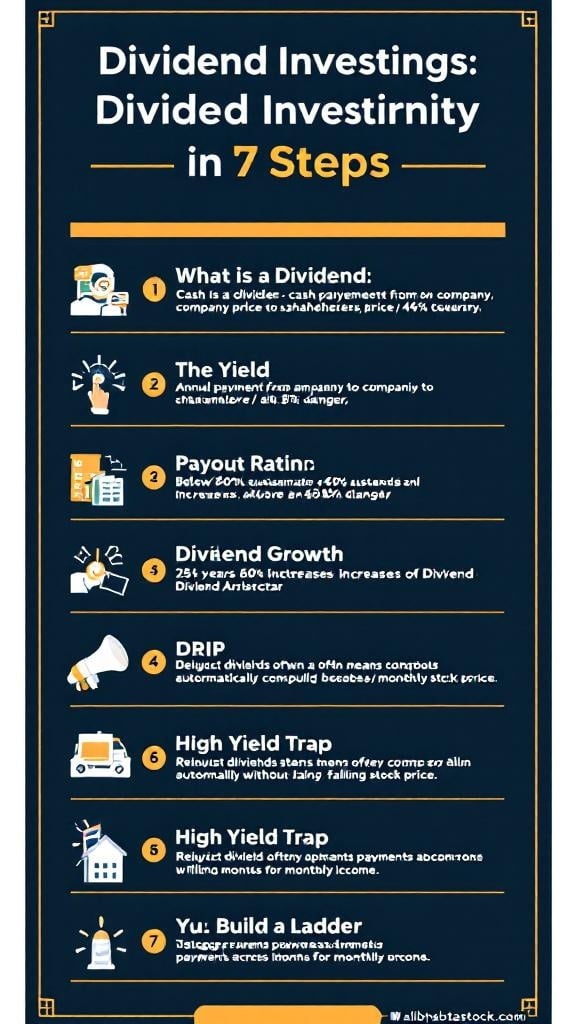
What Dividends Actually Are
A dividend is a cash payment a company makes to its shareholders. Period. No selling required. No market timing needed. You own shares, the board declares a dividend, and the money shows up in your account.
Most dividends pay quarterly. Some pay monthly. A few pay annually. The amount varies by company, sector, and profitability. But the core mechanic doesn’t change: you get paid for owning the stock.
Not every company pays dividends. Growth companies like Amazon and Tesla reinvest profits. Mature companies like Coca-Cola, Johnson & Johnson, and Procter & Gamble return cash to shareholders. Both approaches are valid. They serve different investors.
The Yield: What You’re Actually Earning
Dividend yield tells you what percentage of your investment comes back as cash each year. The formula is simple:
Dividend Yield = Annual Dividend ÷ Stock Price
A $100 stock paying $4 per year in dividends yields 4%. That $4 shows up as $1 per quarter. No effort required.
Higher yields look attractive. But yield is a double-edged metric. A 10% yield often means the stock price fell and the dividend hasn’t been cut yet. That’s a trap, not an opportunity.
Compare yields across sectors. Utility stocks typically yield 3-5%. REITs often yield 4-7%. Tech stocks yield 1-2% or nothing. Context matters more than the raw number.
Payout Ratio: The Sustainability Check
The payout ratio measures what percentage of a company’s earnings go toward dividends. It’s the single most important number for evaluating whether a dividend is safe.
Payout Ratio = Annual Dividend ÷ Earnings Per Share
Below 60%: Sustainable. The company retains enough earnings to grow while rewarding shareholders.
60-80%: Watch closely. The dividend consumes most profits. Any earnings miss could trigger a cut.
Above 80%: Danger zone. The company is paying out nearly everything it earns. One bad quarter and the dividend disappears.
Dividend cuts destroy shareholder value. AT&T cut its dividend in 2022 and the stock dropped 7% overnight. The yield before the cut was attractive. The sustainability wasn’t.
Dividend Growth: The Real Wealth Builder
The best dividend stocks don’t just pay — they raise. Every year.
Companies in the S&P 500 Dividend Aristocrats index have increased dividends for 25+ consecutive years. That list includes Coca-Cola (62 years), Johnson & Johnson (62 years), and Procter & Gamble (68 years).
Why does growth matter more than yield? Because a 2% yield that grows 10% annually doubles your income in seven years. A 5% yield that stays flat never changes. Over a 20-year horizon, the grower beats the high-yielder every time.
Dividend growth compounds. Year one: 2% yield. Year five: 3%. Year ten: 4.5%. Year twenty: 8% on your original investment. That’s how patient investors build wealth.
DRIP: Compounding on Autopilot
A Dividend Reinvestment Plan (DRIP) automatically uses your dividend payments to buy more shares. No commissions. No decisions. Just compounding.
Here’s the math. You invest $10,000 in a stock yielding 3% with 5% annual dividend growth. After 20 years with DRIP, your income stream roughly triples. Without DRIP, it doubles. The difference is reinvestment.
Most brokers offer DRIP for free. Set it and forget it. The mechanism handles the rest.
The High-Yield Trap
This deserves its own section because it catches smart investors every year.
A stock yielding 8-12% looks incredible. It’s almost always a warning sign. Here’s why:
The yield is high because the stock price dropped. If a $50 stock pays $2 per year, the yield is 4%. If the stock falls to $20, the yield becomes 10%. Same dividend. Different risk profile.
The market priced that stock at $20 for a reason. Maybe earnings are declining. Maybe the sector is contracting. Maybe management telegraphed a dividend cut. The yield isn’t a gift — it’s a risk premium.
Before chasing high yields, check the payout ratio. If it’s above 80%, the dividend is likely getting cut. If the company’s debt is rising, the same. High yield plus unsustainable payout equals a value trap.
Build a Dividend Ladder
You don’t need all your income at once. You need it spread out.
Dividend payments follow quarterly schedules. Some companies pay in January, April, July, and October. Others pay in February, May, August, and November. A few pay in March, June, September, and December.
Own stocks across all three payment cycles. You get income every single month instead of four lump payments per year.
| Payment Cycle | Months | Example Holdings |
|---|---|---|
| Cycle 1 | Jan, Apr, Jul, Oct | Coca-Cola, ExxonMobil, Verizon |
| Cycle 2 | Feb, May, Aug, Nov | PepsiCo, Chevron, Broadcom |
| Cycle 3 | Mar, Jun, Sep, Dec | Apple, Microsoft, Realty Income |
Twelve months. Twelve income deposits. No gaps.
The Bottom Line
Dividend investing isn’t flashy. It won’t make you rich overnight. But it does something most strategies can’t — it pays you cash while you wait for the market to do whatever it’s going to do.
Start with sustainable yields (3-5%). Check the payout ratio (below 60%). Favor dividend growth over raw yield. Turn on DRIP. Build a payment ladder. Check your statements monthly, not daily.
Then let time do the work.
Frequently Asked Questions
What Is Dividend Investing?
Dividend investing is a strategy focused on buying stocks that pay regular cash dividends. The goal is generating income from your portfolio without selling shares.
How Much Do I Need to Start Dividend Investing?
Most brokers have no account minimums. You can start buying dividend stocks with as little as $100. Fractional shares make it accessible at any budget.
Are Dividend Stocks Safe?
No stock is completely safe. But dividend-paying companies tend to be established, profitable businesses with predictable cash flows. The payout ratio and dividend growth history are the best indicators of safety.
What’s the Difference Between Dividend Yield and Dividend Growth?
Yield measures current income as a percentage of your investment. Growth measures how fast the dividend increases over time. Growth matters more for long-term investors.
Should I Reinvest My Dividends?
For most investors under 60, yes. DRIP reinvestment compounds your returns significantly over time. If you need the income for living expenses, take the cash instead.
Can I Live Off Dividends?
It depends on your portfolio size and expenses. A $1 million portfolio yielding 4% generates $40,000 annually. That’s feasible as a retirement income strategy, but requires decades of accumulation.
This article is for informational purposes only and does not constitute financial or legal advice. Past performance is not indicative of future results. Consult a qualified financial advisor before making investment decisions. If you believe you have been a victim of investment fraud, contact a securities attorney immediately.


